Introduction
For many South African students, completing a qualification is only part of the journey. The real challenge often begins after graduation—finding meaningful workplace experience that meets industry expectations.
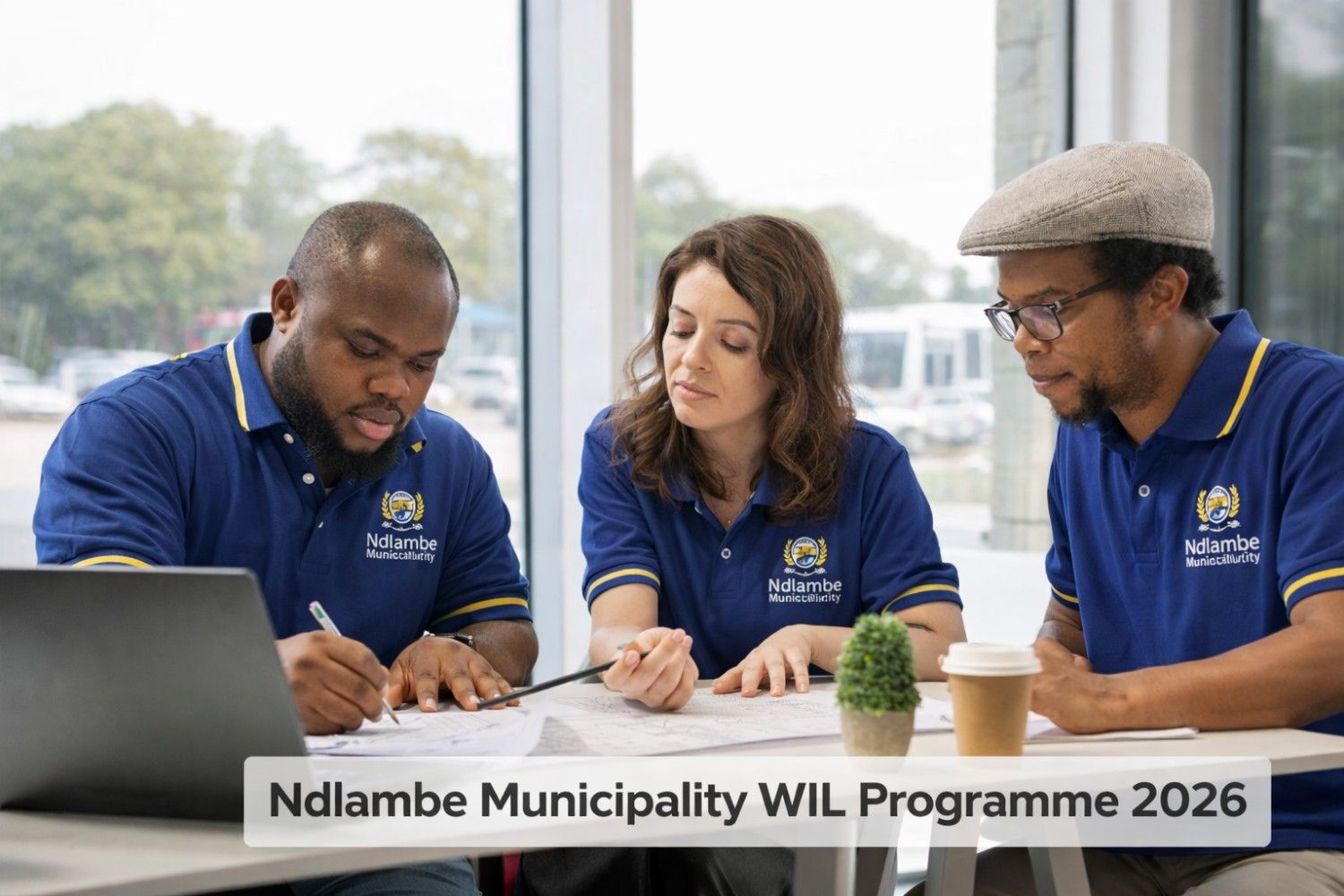
The Ndlambe Municipality WIL Programme 2026 offers a structured pathway to address this gap. Designed specifically for SETA-funded students in construction and planning-related fields, the programme provides practical exposure within a municipal environment.
With a strict deadline and limited qualifying disciplines, this opportunity is both competitive and valuable. For eligible students, it could be a critical step toward building a career in the built environment sector.
What Is the Ndlambe Municipality WIL Programme?
The Ndlambe Municipality Work Integrated Learning (WIL) Programme is an 18-month structured workplace placement aimed at students who require practical experience to complement their academic studies.
Offered by Ndlambe Local Municipality, the programme focuses on real-world exposure rather than permanent employment. It is specifically designed for students in built environment disciplines who need workplace training to complete or strengthen their qualifications.
Unlike general internships, this is a targeted intake linked to specific study areas and SETA funding requirements.
Background / Purpose
Work Integrated Learning (WIL) plays a critical role in South Africa’s education and training system. It bridges the gap between theoretical knowledge and workplace application.
Municipal programmes like this aim to:
- Support students in completing required practical training
- Develop technical and professional workplace skills
- Provide exposure to public sector infrastructure and planning systems
- Improve employability in construction and planning careers
For students in technical fields, access to real project environments is essential—and often difficult to secure independently.
How It Works
Successful applicants will be placed within municipal departments aligned with their field of study for a period of 18 months.
During this time, participants will:
- Gain hands-on experience in municipal operations
- Work alongside professionals in construction and planning
- Apply classroom knowledge in real-world scenarios
- Build a portfolio of workplace experience
It is important to note that this programme is development-focused and does not guarantee permanent employment after completion.
Key Features / Programme Highlights
- 18-month structured workplace experience
- Placement within a municipal (public sector) environment
- Focus on built environment disciplines
- Opportunity to apply technical knowledge in real projects
- Exposure to infrastructure planning and development processes
- Strengthening of CV and employability
Table Summary of Important Information
| Category | Details |
|---|---|
| Programme Name | Ndlambe Municipality WIL Programme 2026 |
| Duration | 18 months |
| Institution | Ndlambe Local Municipality |
| Eligible Fields | N6 Building & Civil Construction, Regional & Town Planning |
| Funding Requirement | Must be SETA-funded |
| Age Requirement | 18–35 years |
| Location Requirement | Must reside within Ndlambe Municipality |
| Application Deadline | 21 April 2026 at 12:00 |
| Submission Method | Physical or postal (no fax allowed) |
Who Can Apply / Eligibility
Applicants must meet all the following requirements:
- Be funded by a SETA (Sector Education and Training Authority)
- Be between 18 and 35 years old
- Be studying or specialising in an approved field
- Reside within the Ndlambe municipal jurisdiction
- Clearly indicate the programme/field in the application
Important:
Meeting only the academic requirement is not enough. Applicants must also satisfy funding, age, and residency criteria.
Accepted Fields of Study
Only the following disciplines are eligible:
- Engineering Studies: N6 Building and Civil Construction
- Regional and Town Planning
Applicants outside these fields should not apply, as applications will be screened strictly against these requirements.
Required Documents
Applicants must submit a complete application package including:
- Application letter
- Updated Curriculum Vitae (CV)
- Certified copies of qualifications
- Certified copy of South African ID
- Proof of SETA funding
Tip:
Ensure all documents are recently certified and clearly readable. Missing or unclear documents can lead to automatic disqualification.
Application Process
Applications must be submitted to the Human Resources Unit of Ndlambe Local Municipality.
Postal Address:
P.O. Box 13
Port Alfred
6170
Physical Address:
01 Causeway Road
Civic Centre
Port Alfred
Important Rules:
- Faxed applications will not be accepted
- Late submissions will not be considered
Important Things to Know / Practical Tips
Before applying, keep these key points in mind:
- Apply early: The deadline is midday, not end of day
- Double-check eligibility: Especially SETA funding and field of study
- Prepare documents in advance: Certification can take time
- Avoid disqualification risks:
- Do not submit incomplete applications
- Do not attempt to influence officials or councillors
Additional conditions include:
- Selection may consider equitable ward representation
- Participation does not guarantee permanent employment
- If no feedback is received within one week after closing, consider the application unsuccessful
- CVs may be retained for future opportunities
- Applicants with disabilities are encouraged to apply
Conclusion
The Ndlambe Municipality WIL Programme 2026 provides a rare opportunity for SETA-funded students to gain meaningful, structured workplace experience in the public sector.
For students in construction and planning fields, this type of exposure can significantly strengthen career readiness. It offers insight into real municipal systems, infrastructure projects, and professional work environments.
With limited qualifying fields and a strict application process, this is a competitive opportunity. Eligible students are encouraged to prepare thoroughly and apply well before the 21 April 2026 at 12:00 deadline.
FAQ
1. Is this programme paid?
The notice does not specify a stipend. Applicants should confirm details during the application or selection process.
2. Can I apply if I am not SETA-funded?
No. SETA funding is a mandatory requirement for this programme.
3. Does this programme guarantee a job?
No. It is a workplace learning opportunity and does not guarantee permanent employment.
4. Can I apply if I live outside Ndlambe Municipality?
No. Applicants must reside within the Ndlambe municipal area.
5. What happens if I don’t receive feedback?
If you do not receive feedback within one week after the closing date, your application should be considered unsuccessful.
