
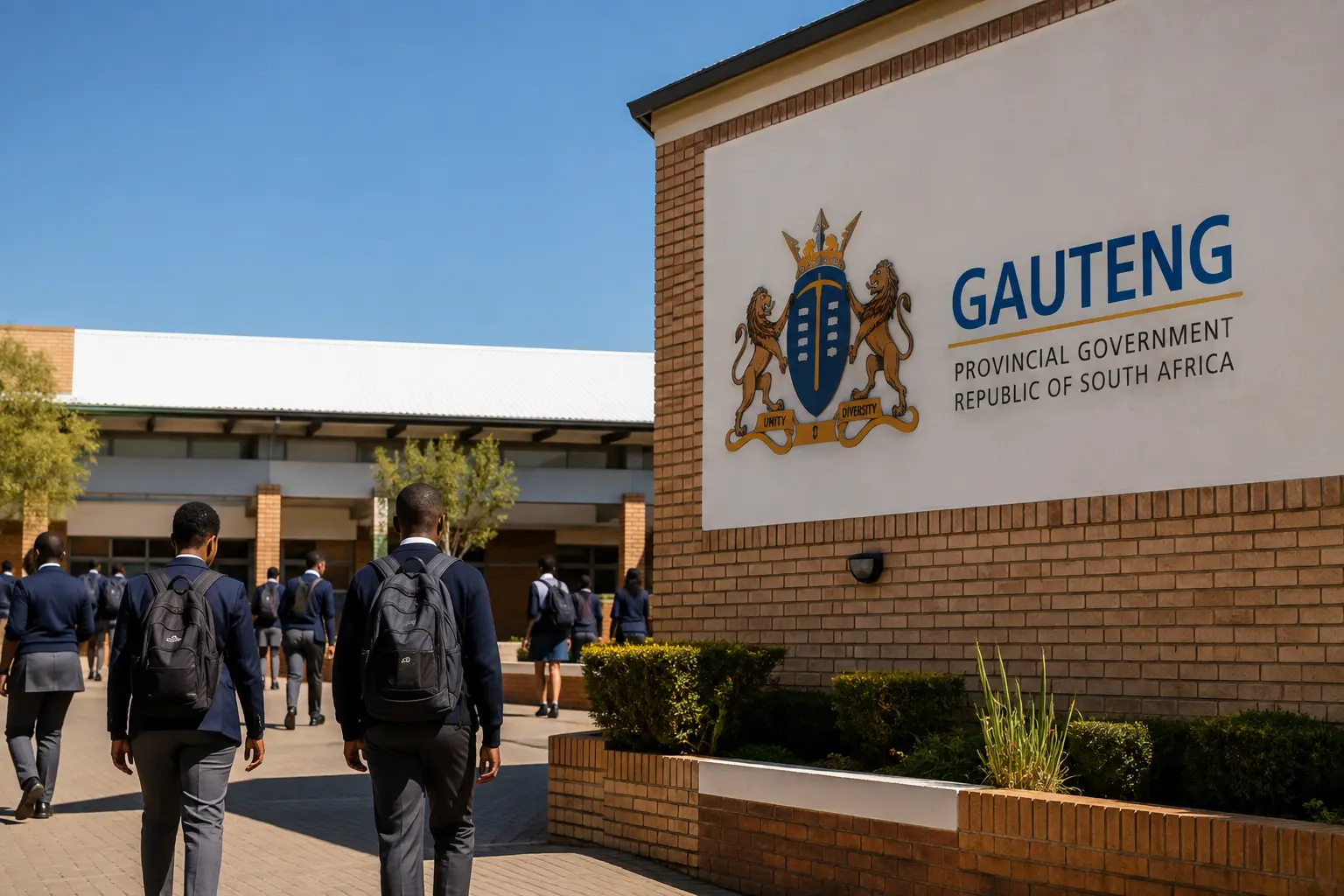
The Gauteng Department of Education has made contingency provisions for matriculants in the wake of water restrictions in the communities of Westbury and Coronationville. The contingency plans see learners writing their examinations at other schools, in an effort to keep the examination programme running while the local water supply issues are resolved.
The following are key points relating to the impact on learners in the two affected communities:
Affected matric learners to write examinations at other schools
Gauteng education officials have ensured that matriculants whose schools are affected by the water restrictions will be allowed to write their examinations at other schools, where necessary.
This is an important contingency measure given the need for national senior certificate examinations to take place in appropriately equipped and secured venues, and adhere to tight scheduling.
By way of contingency, the education department can utilise other schools in the provision of examination venues, while the water issues are resolved at the affected schools.
In addition, school principals are also tasked with collecting examination papers from designated centres.
Water tanks to be used as emergency supply
The Gauteng Department of Education has also provided water tanks and JoJo tanks to schools in the affected communities.
These should serve to provide an emergency supply of water while the main supply issues are being resolved.
Given the importance of water to schools, as a resource for sanitation and general hygiene, emergency supplies are only a short-term bridging solution until normal supplies can be restored.
The Gauteng Department of Education has stated that it is the restoration of the main water supply that should be the priority.
Water restrictions impact on everyday teaching and learning
In addition to the national senior certificate examinations and the contingency plans that have been made for these examinations, the water restrictions also have an impact on everyday teaching and learning.
According to the latest information available, attendance at school has been impacted by the restrictions, especially for learners who have depended on transport to get to school. It would seem that those who are fortunate enough to be able to walk to school will be able to do so while the water restrictions are in place.
The disruption to everyday teaching and learning is another reason why the contingency plans for examinations are so important – the disruptions to the school day caused by the water restrictions can impact on more than just the examination timetable.
Why contingency plan is important for matric learners
For matriculants, it is important that they are able to write their examinations, since their matric results can determine their future studies, including applications for tertiary education, training, bursaries and employment.
Any disruptions to the examination schedule could therefore have far-reaching consequences.
The alternative examination venues serve as a contingency plan for matriculants in the affected schools to be able to write their examinations, despite the challenges being experienced at their own schools.
Parents of matriculants should therefore ensure that they are keeping up to date with developments at their children’s schools, including any changes to the examination venue, reporting times, and other examination-related announcements.
School infrastructure needs to be considered
The water supply issues in Westbury and Coronationville, and the contingency plans for examinations being made by the Gauteng Department of Education, highlight the importance of schools considering how reliant they are on local infrastructure, such as water supply.
Water is an essential resource for schools, and shortfalls in supply can have an impact on everything from the ability of learners to attend school, to sanitation and examination arrangements.
While emergency measures, such as the use of water tanks, can mitigate the immediate shortfall, the long-term aim should be for schools to have uninterrupted water supply.
The issues also serve as a reminder that the education sector and local government need to be working closely together, and have contingency plans in place, when it comes to essential services such as water supply.
What learners and parents need to know
Learners and parents in the affected communities should be on the lookout for any announcements at their schools and from the Gauteng Department of Education relating to contingency examination arrangements.
It would be important to confirm the following:
– Whether the learner has been placed on an alternative venue list.
– What the venue is.
– What the reporting time is.
– Whether transportation has been arranged, if necessary.
– Whether there are any changes to the examination schedule.
Learners and parents should not rely on unverified information circulating on social media when it comes to examination arrangements. Particular caution should be exercised when it comes to the examination venue and schedule.
What happens next?
The most immediate priority is for the Gauteng Department of Education to ensure that matriculants in the affected schools are able to write their examinations in appropriate venues, while the affected schools receive the assistance and support they need in terms of water supply. The long-term priority is for water supply to be restored to the affected schools so that everyday teaching and learning can resume without disruption.
For the matriculants in the affected schools, the alternative examination venues will be a welcome contingency, but it serves more as an illustration of the importance of reliable water supply to schools.
Sources
The information in this article was compiled from statements made by the Gauteng Department of Education relating to contingency arrangements, and reports regarding the water supply interruptions affecting schools in Westbury and Coronationville.
We recommend that learners and parents consult directly with their schools and the Gauteng Department of Education for the most up to date information, as far as examination schedules are concerned.
Editorial policy
We strive to provide accurate, informative and independent education and careers journalism. Information in this article has been verified using available information resources, and the information has been presented in a manner that distinguishes between verifiable information and interpretation wherever possible.
Learners and parents are encouraged to conduct their own research, especially in light of changing circumstances, particularly for matters relating to education and careers.
Disclaimer
Information contained in this article is intended for informational purposes only, and is not a substitute for official announcement from the Gauteng Department of Education, schools or other educational institutions.
The article does not constitute an offer of any kind. Learners and parents in the affected communities should make their own inquiries with the relevant authorities before making any decisions.
Public awareness
Access to potable water is essential to a functioning school. Parents, learners and members of the public are encouraged to report any disruptions to water supply, as well as any disruptions to schools, using their local authorities.
Readers are also encouraged to share this information with others, where appropriate, and help disseminate verified information to affected families and schools. In the interests of providing accurate information to those who need it most, members of the public are encouraged to avoid sharing unverified information and speculation, particularly as it relates to disruption of examination schedules.
