
Introduction
Every year, thousands of South African students enter SETA-funded programmes expecting a smooth path into employment. While many succeed, a large number look back and realise there were simple steps they could have taken earlier to improve their chances.
SETA learnerships, internships, and bursaries are powerful opportunities—but only if you approach them strategically. Understanding the most common regrets from past participants can help you avoid delays, missed opportunities, and unnecessary stress.
This guide highlights the most important lessons SETA students wish they had known sooner—so you can position yourself for success from day one.
What Is a SETA Programme?
A SETA (Sector Education and Training Authority) programme is a structured learning pathway that combines:
- Theoretical training (classroom or online learning)
- Practical workplace experience
- Nationally recognised qualifications (aligned with NQF levels)
These programmes are designed to bridge the gap between education and employment, helping young people gain real, job-ready skills.
Background / Purpose
SETA programmes were created to tackle two major challenges in South Africa:
- High youth unemployment
- Skills shortages in key industries
By funding training that is directly aligned with industry needs, SETAs aim to produce graduates who are ready to enter the workforce immediately.
However, success depends not just on being accepted—but on how well you prepare and participate.
How It Works
Most SETA programmes follow a structured process:
- Application and selection
- Registration with a training provider
- Completion of theory modules
- Workplace experience (where applicable)
- Assessments and Portfolio of Evidence (PoE)
- Certification and potential job opportunities
Students who take initiative early often gain the most from this process.
10 Things SETA Students Regret Not Doing Earlier
1. Not Applying Early Enough
Many students wait until deadlines are close—only to find that positions are already filled.
Lesson: Apply as soon as applications open.
2. Ignoring Scarce Skills Fields
Some applicants choose programmes based on convenience instead of demand.
Lesson: Focus on industries like ICT, engineering, logistics, and healthcare where opportunities are higher.
3. Submitting Incomplete Documents
Missing or uncertified documents are one of the biggest reasons for rejection.
Lesson: Prepare certified copies of your ID, results, and proof of residence in advance.
4. Not Having a Professional CV
Even for learnerships, a weak CV can reduce your chances.
Lesson: Create a clear, structured CV highlighting your skills and willingness to learn.
5. Underestimating Workplace Expectations
Some students think learnerships are easy because they are training programmes.
Lesson: Treat it like a real job—punctuality, discipline, and professionalism matter.
6. Not Tracking Application Updates
Many miss emails or calls from recruiters.
Lesson: Check your email and phone regularly after applying.
7. Choosing the Wrong SETA
Applying to the wrong sector reduces your chances of acceptance.
Lesson: Match your interests with the correct SETA (e.g., ICT, services, retail).
8. Not Understanding the Programme Requirements
Some students apply without fully reading the criteria.
Lesson: Always review eligibility requirements before applying.
9. Missing Out on Multiple Opportunities
Students often apply for only one programme.
Lesson: Apply to multiple SETA opportunities to increase your chances.
10. Not Taking the Programme Seriously
Some participants fail to complete assignments or workplace tasks.
Lesson: Your performance affects your certification and future job prospects.
Table Summary of Key Lessons
| Common Regret | What to Do Instead |
|---|---|
| Applying late | Apply early |
| Choosing low-demand fields | Focus on scarce skills |
| Incomplete documents | Prepare certified copies |
| Weak CV | Create a professional CV |
| Poor work ethic | Treat it like a job |
| Ignoring communication | Monitor email and phone |
| Wrong SETA choice | Match sector to career goals |
| Not reading requirements | Understand criteria fully |
| Applying once | Apply multiple times |
| Lack of commitment | Stay consistent and disciplined |
Who Can Apply / Eligibility
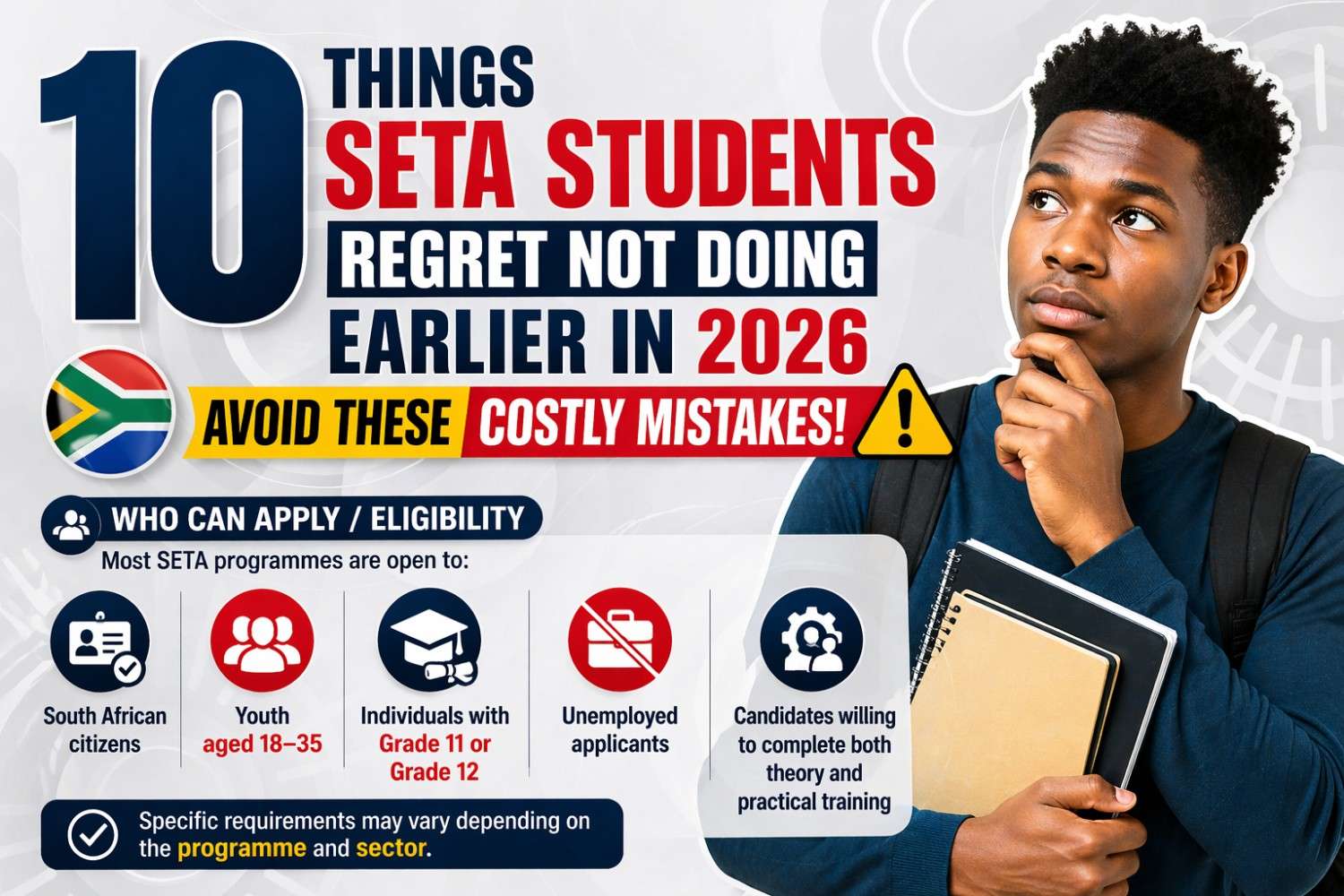
Most SETA programmes are open to:
- South African citizens
- Youth aged 18–35
- Individuals with Grade 11 or Grade 12
- Unemployed applicants
- Candidates willing to complete both theory and practical training
Specific requirements may vary depending on the programme and sector.
How to Apply
Follow these steps to improve your chances:
- Identify your preferred career field
- Find the relevant SETA or training provider
- Prepare all required documents
- Submit applications early
- Apply for multiple opportunities
- Follow up on your application status
Important Things to Know / Practical Tips
- Consistency matters more than luck
- Professional behaviour can lead to job offers
- Your PoE (Portfolio of Evidence) is critical for certification
- Networking during your programme can open doors
- Always verify opportunities to avoid scams
Conclusion
SETA programmes can be life-changing—but only if you approach them with the right mindset and preparation. The most common regrets from past students are often simple mistakes that can easily be avoided.
By applying early, staying organised, and taking your training seriously, you can turn a SETA opportunity into a long-term career path.
FAQ
1. What is the biggest mistake SETA applicants make?
Applying late or submitting incomplete documents.
2. Can I apply for more than one SETA programme?
Yes, and it’s recommended to increase your chances.
3. Do SETA programmes guarantee a job?
No, but they significantly improve employability.
4. What documents are usually required?
Certified ID, academic results, CV, and proof of residence.
5. Are SETA programmes paid?
Some include stipends, especially learnerships and internships.
