
Introduction
Getting a rejection from a SETA bursary can feel discouraging—especially if you were relying on that funding to continue your studies. But a rejection does not mean the end of your options.
In South Africa’s skills development system, bursaries are competitive and limited. Many qualified applicants are not selected simply because of funding caps, not because they are unfit.
The important step is what you do next. With the right approach, you can still secure funding, strengthen your profile, and reapply successfully.
What Does a SETA Bursary Rejection Mean?
A rejection usually means your application was not selected in that intake cycle, not that you are permanently ineligible.
Common reasons include:
- Limited funding availability
- High competition
- Missing or incomplete documents
- Academic performance below the threshold
- Field of study not aligned with that SETA
Understanding the reason is key to improving your next application.
Background / Purpose
SETA bursaries, such as those offered by Services SETA, are designed to fund scarce and critical skills.
Because of this:
- Funding is limited
- Selection is strict
- Priority groups are targeted
This means even strong candidates may not be selected on the first attempt.
How to Respond After a Rejection
Instead of stopping your plans, take these practical steps:
1. Review Your Application
Check if you:
- Submitted all required documents
- Met the academic requirements
- Applied to the correct SETA sector
Small mistakes can lead to rejection.
2. Request Feedback (If Possible)
Some SETAs allow applicants to request feedback.
Ask about:
- Missing documents
- Qualification alignment
- Selection criteria
This can help you improve your next submission.
3. Apply to Other SETAs
Do not limit yourself to one option. Consider applying to:
- ETDP SETA
- W&RSETA
- AgriSETA
Different SETAs fund different fields, and timelines vary.
Alternative Options to Consider
If your bursary application is unsuccessful, you still have multiple pathways:
✔ Apply for Learnerships
Learnerships offer:
- Monthly stipends
- Workplace experience
- Accredited qualifications
These can sometimes be more accessible than bursaries.
✔ Look for Internships
Internships provide:
- Industry exposure
- Practical skills
- Entry into the job market
Many SETAs and companies offer internship programmes annually.
✔ Apply for Other Bursaries
Explore:
- Private company bursaries
- Government bursaries
- University funding programmes
Each has different criteria and deadlines.
✔ Consider TVET or Short Courses
If university funding is not available:
- Enrol at a TVET college
- Take short skills programmes
- Build practical experience
This can strengthen your future applications.
Table: Recovery Plan After Rejection
| Step | Action |
|---|---|
| Review Application | Check documents and requirements |
| Seek Feedback | Understand why you were rejected |
| Apply Elsewhere | Try other SETAs or funding sources |
| Explore Alternatives | Learnerships, internships, short courses |
| Prepare for Next Intake | Improve academic results and documents |
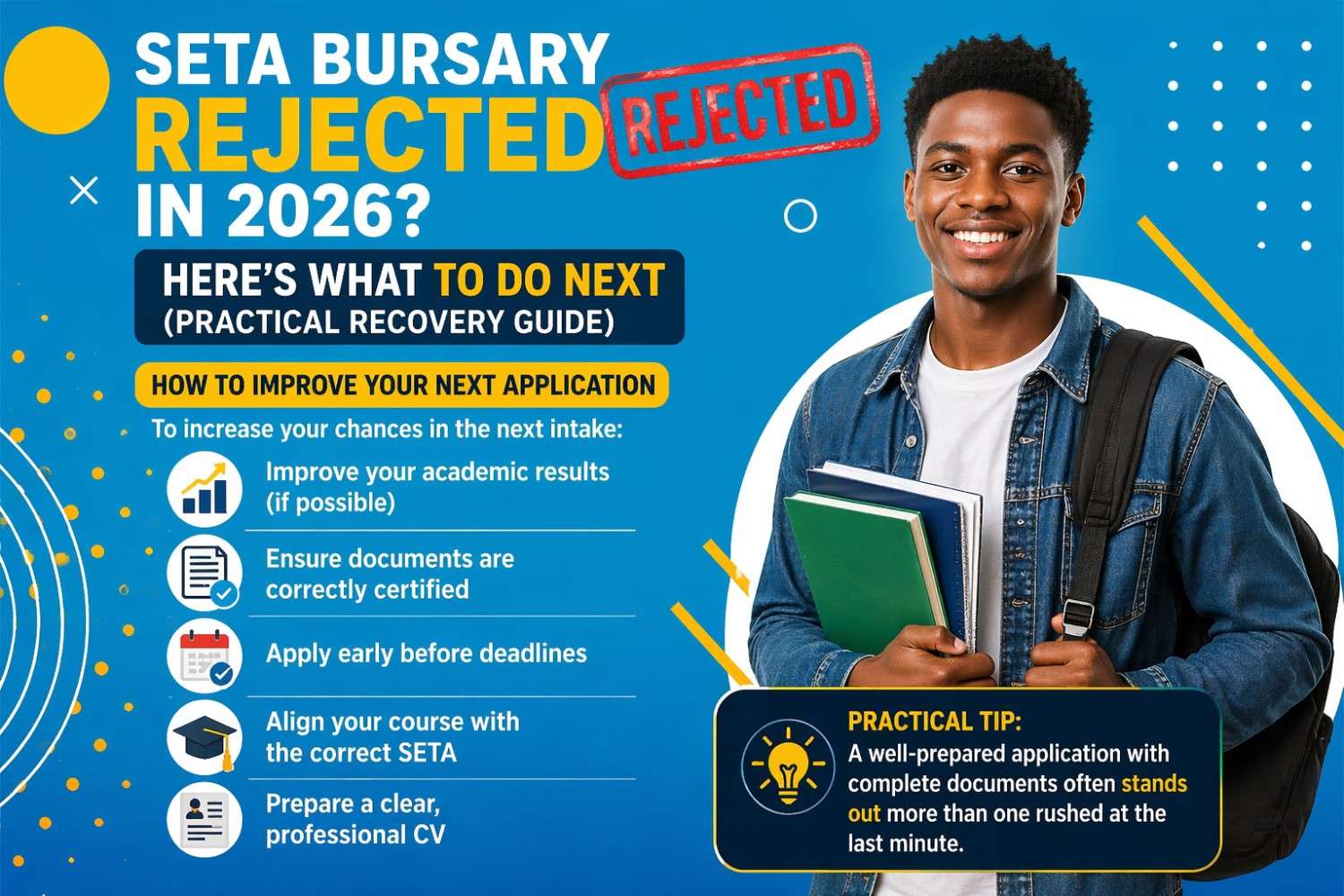
How to Improve Your Next Application
To increase your chances in the next intake:
- Improve your academic results (if possible)
- Ensure documents are correctly certified
- Apply early before deadlines
- Align your course with the correct SETA
- Prepare a clear, professional CV
Practical Tip:
A well-prepared application with complete documents often stands out more than one rushed at the last minute.
Important Things to Know
- Rejection is common due to limited funding
- You can reapply in the next cycle
- Each SETA has different criteria
- Alternative opportunities can still lead to careers
Key Insight:
Many successful candidates were rejected at least once before being accepted.
Conclusion
A SETA bursary rejection in 2026 is not the end of your journey—it is a signal to adjust your strategy.
By reviewing your application, exploring alternative opportunities, and preparing for the next intake, you can still move forward toward your career goals.
The most important thing is to stay proactive and keep applying.
FAQ
1. Can I reapply after being rejected?
Yes. You can apply again in the next intake cycle.
2. Does rejection mean I don’t qualify?
No. It often means there were more applicants than available funding.
3. What is the best alternative to a bursary?
Learnerships and internships are strong alternatives that provide both training and income.
4. Should I apply to multiple SETAs?
Yes. Applying to multiple relevant SETAs increases your chances.
5. How can I improve my chances next time?
Submit complete documents, apply early, and align your course with the correct SETA sector.
