Introduction
If you’ve ever been told you need experience to get a job—but can’t get experience without a job—you’re not alone. This is one of the biggest challenges facing young people in South Africa.
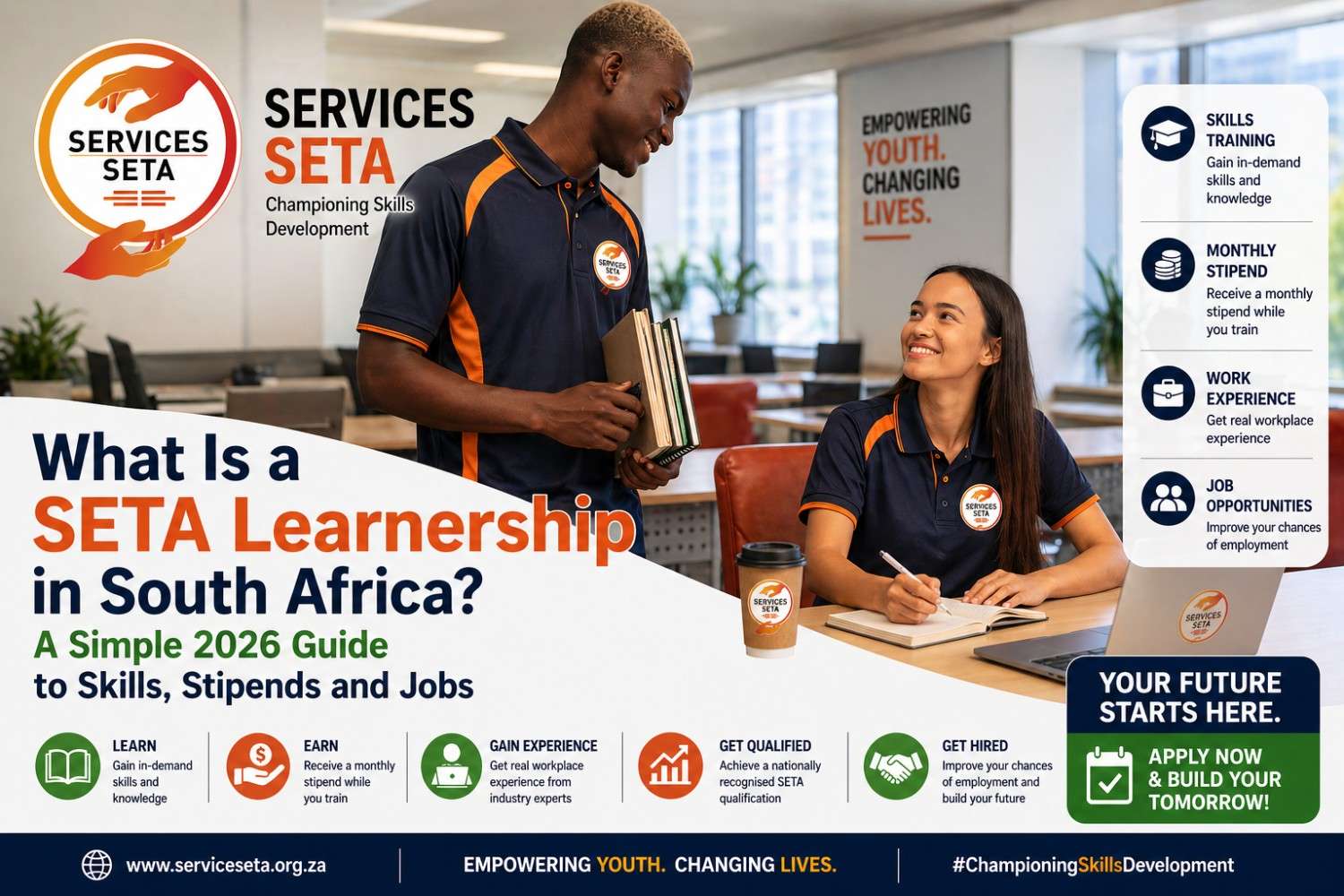
A SETA learnership is designed to solve exactly that problem. It gives you the chance to learn, gain real work experience, and earn a monthly stipend at the same time. In 2026, learnerships remain one of the most effective ways to enter the job market without needing a university degree.
What Is a SETA Learnership?
A SETA learnership is a structured, work-based training programme that combines:
- 70% practical workplace training
- 30% theoretical classroom learning
These programmes are managed by Sector Education and Training Authorities (SETAs) and are formally registered with the Department of Higher Education and Training (DHET).
At the end of the programme, learners receive a nationally recognised qualification aligned with the National Qualifications Framework (NQF).
Background / Purpose
SETA learnerships were introduced under South Africa’s Skills Development Act to:
- Reduce unemployment
- Develop job-ready skills
- Bridge the gap between education and employment
- Support economic growth through skilled workers
They are specifically designed to help people gain real experience while learning, making them highly practical.
How It Works
A typical SETA learnership follows this structure:
1. Application & Selection
You apply through an employer, training provider, or platform.
2. Registration
You sign a learnership agreement with the employer and training provider.
3. Training Phase
- Attend classes (theory)
- Work at a company (practical experience)
4. Assessment
Complete assignments and a Portfolio of Evidence (PoE).
5. Certification
Receive an NQF-aligned qualification after successful completion.
Key Features / Programme Highlights
- Work + Study Model
Learn while gaining real job experience - Monthly Stipend
Financial support for transport and basic needs - Free Training
Funded through SETA and government systems - Recognised Qualification
Registered on the NQF - 12-Month Duration (Typical)
Some programmes may vary
Table Summary of Important Information
| Category | Details |
|---|---|
| Programme Type | Work-based learning |
| Training Split | 70% practical, 30% theory |
| Duration | ±12 months |
| Qualification | NQF-aligned certificate |
| Cost | Free (funded) |
| Monthly Stipend | Yes (varies, e.g. R2,000–R6,500+) |
| Target Group | Youth, unemployed, or employed individuals |
| Outcome | Skills + work experience + certification |
Industries & Examples of Learnerships
There are 21 SETAs, each covering different sectors. Examples include:
- ICT Sector – IT support, web development
- Manufacturing – Engineering, motor mechanics
- Retail – Sales assistant, merchandising
- Finance – Banking, accounting support
- Health & Welfare – Community health roles
- Education & Training – Facilitator and assessor training
Who Can Apply / Eligibility
Requirements vary, but most learnerships require:
- South African citizen
- Age 18–35 (varies)
- Grade 10, 11, or 12 (depending on programme)
- Unemployed (for many programmes)
- Willingness to learn and work
Some learnerships also accept employed individuals for upskilling.
How to Apply
To apply for a SETA learnership:
Step 1: Choose a Career Field
Select a sector that matches your interests.
Step 2: Find Opportunities
Look on SETA websites, company portals, or platforms like SAYouth.
Step 3: Prepare Documents
- Certified ID copy
- Academic results
- CV
Step 4: Submit Applications
Apply early and to multiple programmes.
Step 5: Prepare for Interviews
Be ready for screening, tests, or interviews.
Important Things to Know / Practical Tips
- It’s Not Just Training—It’s Work
Treat it like a real job - Performance Matters
Good performance can lead to employment - Competition Is High
Apply to multiple opportunities - Stipends Vary
Not all programmes pay the same amount - Consistency Is Key
Keep applying even if you are not selected immediately
Conclusion
A SETA learnership is one of the most practical ways to start a career in South Africa. It combines education, experience, and income into one structured programme—making it ideal for young people who want to enter the workforce quickly.
In 2026, as employers increasingly value skills and experience, learnerships remain a powerful stepping stone toward long-term employment and career growth.
FAQ
1. Is a SETA learnership free?
Yes, most are fully funded and do not require tuition fees.
2. Do I get paid during a learnership?
Yes, learners usually receive a monthly stipend.
3. How long does a learnership last?
Typically around 12 months, but it can vary.
4. Is a learnership the same as an internship?
Not exactly. Learnerships lead to a formal NQF qualification, while internships focus mainly on experience.
5. Can a learnership lead to a job?
Yes, many learners are employed after completing their programmes, depending on performance and availability.
