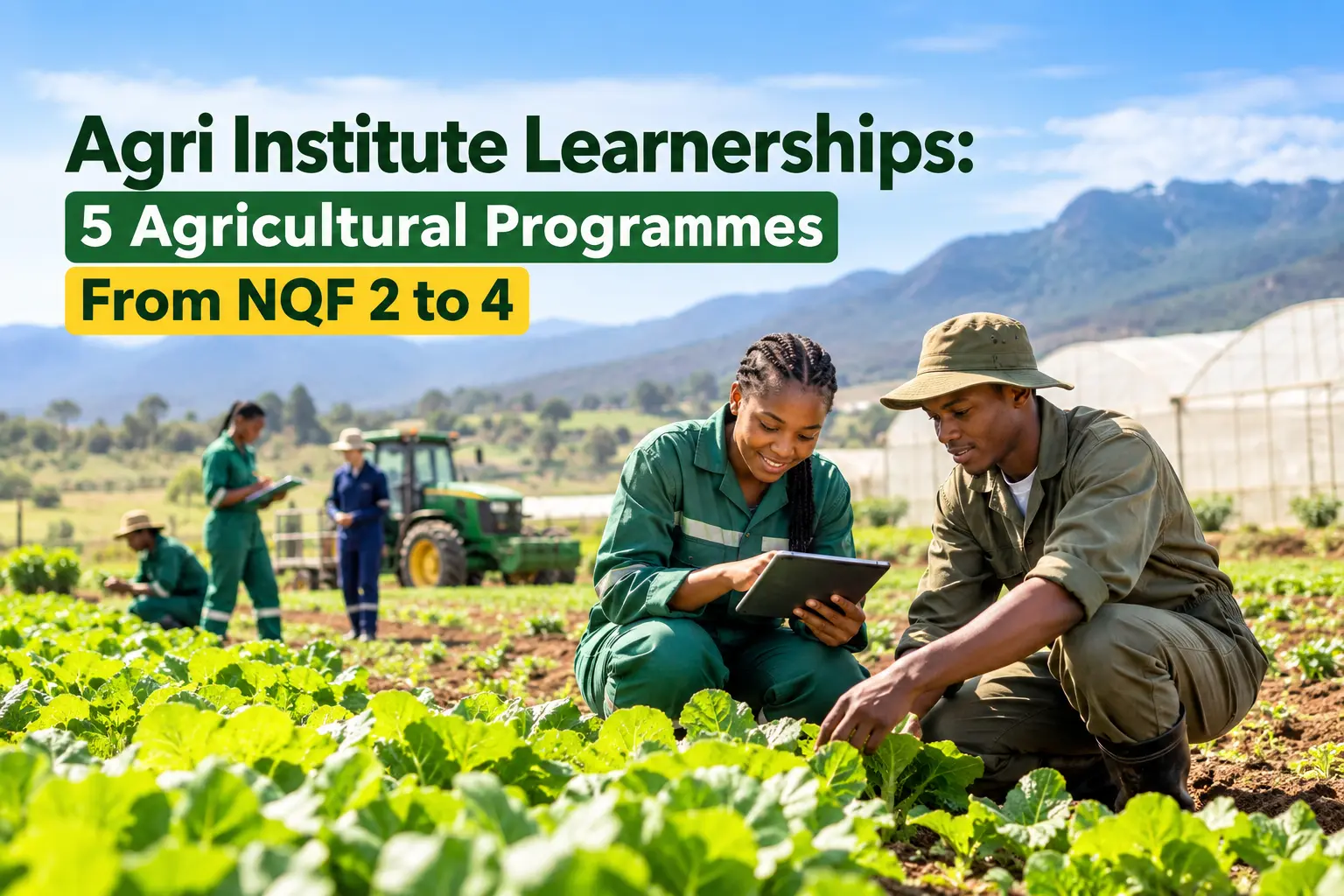
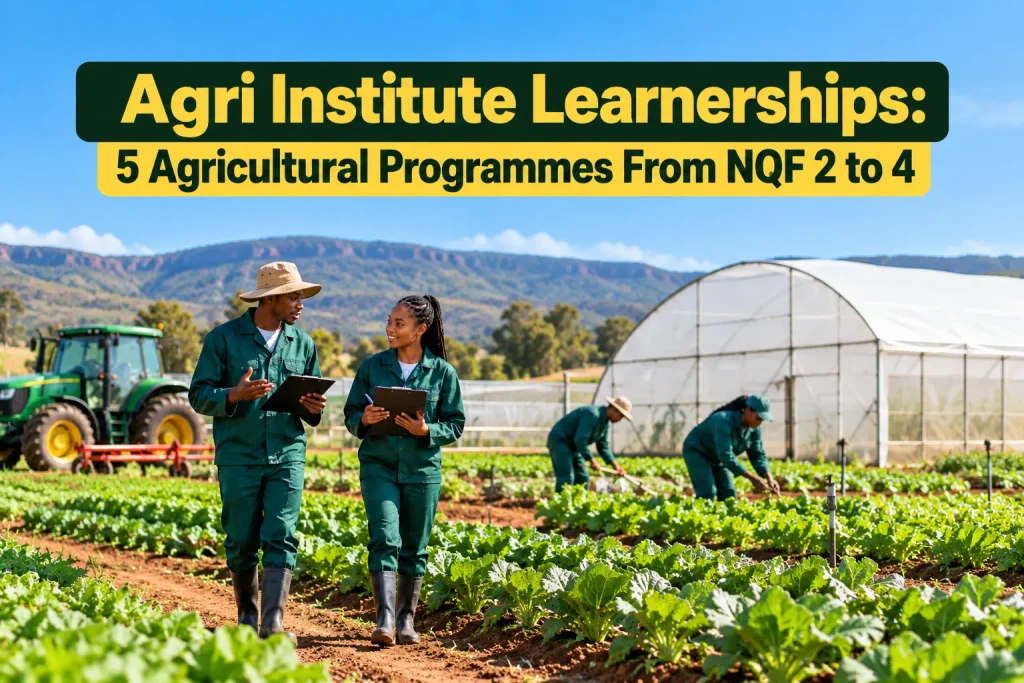
South Africans with an interest in gaining practical agricultural knowledge might look into learnership opportunities offered by the Peritum Agri Institute – with training ranging from level 2 to level 4 of the National Qualifications Framework (NQF).
The courses include mixed farming as well as plant production and animal production.
As published information shows, the focus is on combining theoretical and practical training to give learners the opportunity to gain both types of experience.
People interested in enquiring about learnerships can contact Peritum Agri Institute via the email address shown below.
Agricultural courses offered
The Peritum Agri Institute website shows five different courses covering various NQF levels. Below are the key facts.
1. National Certificate in Mixed Farming Systems – NQF Level 2
The first qualification is the National Certificate in Mixed Farming Systems at NQF Level 2.
The SAQA ID for this course is 48977.
As entry requirements, this course asks for Grade 10.
The duration is 12 months.
This course focuses on providing learners with the necessary knowledge and practical experience.
The next qualifications in this list are at NQF Level 3.
2. National Certificate in Plant Production – NQF Level 3
The National Certificate in Plant Production has SAQA ID 49052.
As the entry requirement, this course asks for Grade 10.
The duration is 12 months.
This NQF Level 3 course specialises in plant production.
3. National Certificate in Plant Production – NQF Level 4
Another option at NQF Level 4 is the National Certificate in Plant Production.
The SAQA ID is 49009.
The entry requirement is again Grade 10.
The duration is 12 months.
The next two courses are about animal production.
4. National Certificate in Animal Production – NQF Level 3
The National Certificate in Animal Production is another NQF Level 3 course.
The SAQA ID is not specified in the supplied information.
Again, Grade 10 is the entry requirement.
The duration has not been specified.
5. National Certificate in Animal Production – NQF Level 4
The last course in this list is the National Certificate in Animal Production at NQF Level 4.
The SAQA ID is 48979.
Once again, Grade 10 is the entry requirement and the duration is 18 months.
How the learnership training works
One notable feature of all courses is the combination of theoretical and practical training.
The Peritum Agri Institute website mentions that the learnership combines roughly 50% theory and 50% practical in the workplace.
This is particularly relevant for the agricultural courses because it means that learners will obtain both types of knowledge.
How are learners assessed?
According to the supplied information, learners will not be tested using written examinations.
Instead, learners will be assessed using a Portfolio of Evidence (PoE).
This assessment method asks learners to show their knowledge and practical skills.
Applicants should nevertheless confirm the assessment regulations before registering for the course.
Who should consider these programmes?
The courses mentioned above could be suitable for South Africans who are interested in the agricultural sector but do not necessarily have a tertiary qualification.
The entry requirements for the courses are Grade 10, meaning that learners will not need a matric certificate to register.
However, this does not guarantee that a learnership will be available.
Applicants should contact the Peritum Agri Institute directly to confirm the entry requirements.
What about the stipend and closing date?
Applicants should be wary about using information published on third-party sites and social media when applying for a learnership.
The general Peritum Agri Institute learnership information does not state a closing date or stipend amount applicable to all five courses.
Instead, the stipend and closing date will depend on the specific intake.
Applicants should therefore contact the Peritum Agri Institute to confirm the following information:
- Whether applications are currently open
- When the closing date is for the intake
- Whether a stipend is provided
- How much the stipend is
- What the admission requirements are
- Where the practical training takes place
- What documents are required
- Whether accommodation or other support is available
How students can apply
Students who are interested in the courses can contact the Peritum Agri Institute directly.
The Peritum Agri Institute email address is shown below.
In their email, students should specify which course they are interested in.
Applicants should also include information about their academic background.
Before sending any identifying information, applicants should confirm the application procedure and ensure that they are communicating with the Peritum Agri Institute.
Programmes at a glance
Programme NQF level SAQA ID Published entry requirement Duration
National Certificate in Mixed Farming Systems 2 48977 Grade 10 12 months
National Certificate in Plant Production 3 49052 Grade 10 12 months
National Certificate in Plant Production 4 49009 Grade 10 12 months
National Certificate in Animal Production 3 Not specified in supplied information Grade 10 Not specified
National Certificate in Animal Production 4 48979 Grade 10 18 months
What applicants should check before applying
Before submitting an application, learners should confirm the latest information with the Peritum Agri Institute.
In particular, check the current intake, closing date, funding arrangement, stipend, practical training location and required documents.
The availability of a qualification does not necessarily mean that a funded intake is available at the moment an application is submitted.
For this reason, applicants should differentiate between a qualification and a funded intake.
Editorial and fact-checking information
Fact-checking: Programme names, NQF levels, SAQA identification numbers, entry requirements and durations were based on the supplied Peritum Agri Institute programme information. Applicants should confirm the current intake directly with the provider.
Important: Stipend amounts and closing dates have not been given as confirmed information because they were not specified in the supplied programme information.
Corrections: If programme requirements and intake information change, the article should be updated against the latest information provided by the training institution.
