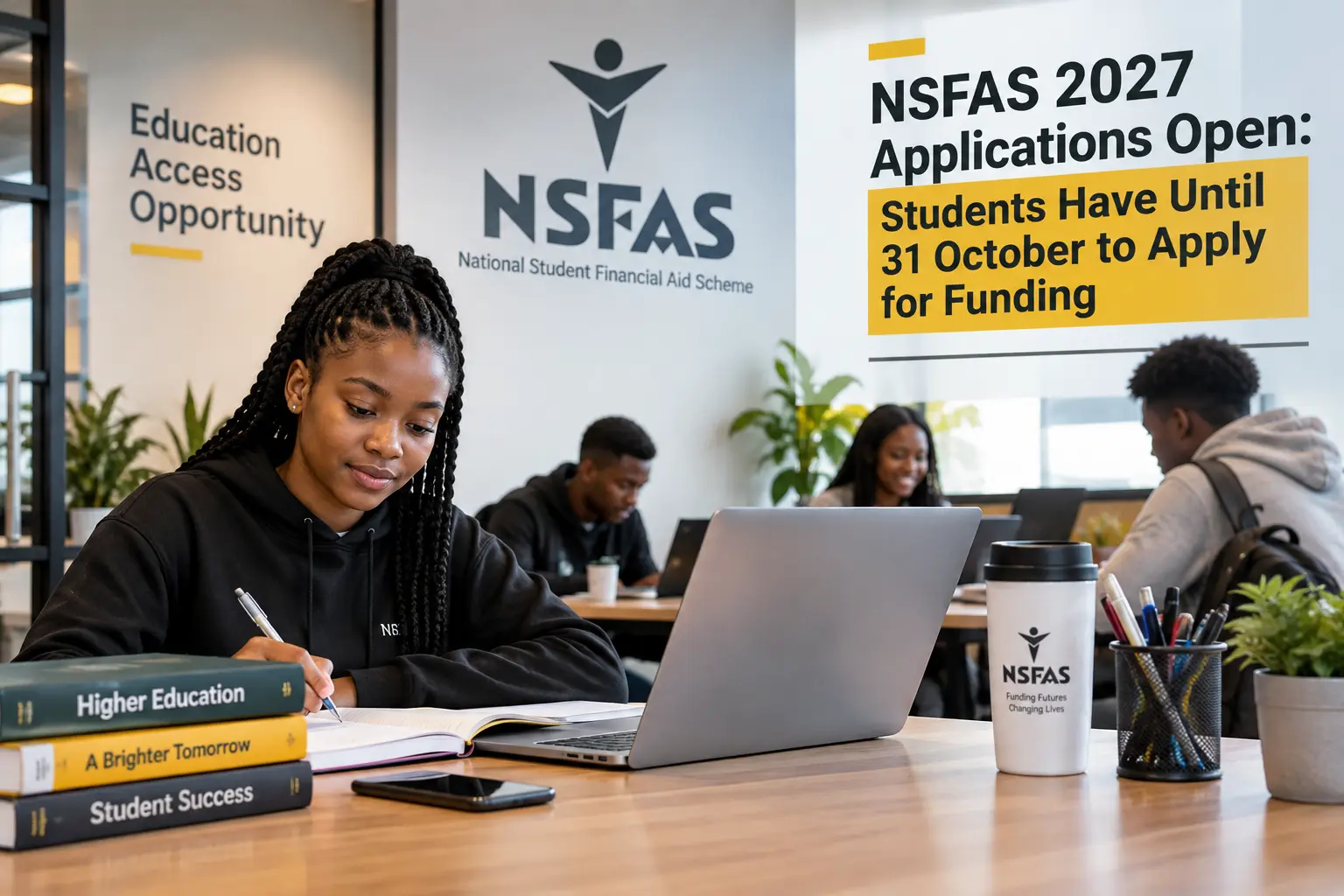
If you’re planning to study at a public university or a TVET college next year, NSFAS has opened its 2027 applications. Minister of Higher Education and Training Buti Manamela announced it on Friday, 18 September 2026, and you have until 31 October to get yours in.
The bit worth knowing: outcomes should land in December. Successful applicants will hear back then, before registration for 2027 kicks off, so at least you’ll know where you stand instead of waiting around into January.
The dates
Applications opened on 18 September and close 31 October 2026. Outcomes in December. Manamela didn’t sugar-coat his advice either. Apply early, he said. Do that and you’ve still got room to sort out a mistake, add a document you missed, or ask for help if something goes wrong on the system. That extra time really does count if you have to fix your details or track down paperwork before the door shuts.
| Information | Details |
|---|---|
| Application cycle | NSFAS 2027 |
| Opening date | 18 September 2026 |
| Closing date | 31 October 2026 |
| Expected outcomes | December 2026 |
| Institutions | Public universities and TVET colleges |
| Platform | myNSFAS |
Do you qualify?
NSFAS funds South African citizens and permanent residents studying, or about to study, at a public university or TVET college. The income limits aren’t identical for everyone, so find the one that matches you.
For the bursary:
- On a SASSA grant that’s verified? You automatically tick the financial box.
- Most other applicants need a combined household income of R350,000 a year or under.
- Have a disability? That ceiling lifts to R600,000 a year.
And if you sit above those limits, there’s still a student loan option for some applicants. Point being, not everyone’s judged the same way.
Applying
It all happens on myNSFAS.
First, set up a profile if you don’t have one, and get your personal details right the first time. Then log in and click Apply. Fill in the form and attach the documents that apply to you. NSFAS wants a signed consent form, and depending on your case, maybe a Declaration Form, a Disability Assessment Questionnaire, or an Orphan and Vulnerable Child Form.
Before you send it, read it back. NSFAS says this plainly: get your info right and your documents attached before you submit. Once it’s in, you can follow the progress on your profile. Keep your phone number and email current too, or you’ll miss whatever they send you.
They’re coming to communities as well
This year isn’t purely an online affair. Manamela said teams will go out across provinces and districts, and into rural areas, townships and the communities that usually get overlooked, to explain the process and help people apply. The department also wants schools, provincial education offices, community groups and institutions on board, so applicants who’d otherwise battle to get information or finish the form aren’t left behind. Schools from the City of Johannesburg joined the launch, learners with disabilities among them, which was rather the whole idea.
So what now?
You’ve got a few weeks. Leaving it to the last minute, though, is how things go wrong. Start now. Use details that are actually correct. Check every required document is attached, and give the whole thing a read before you submit. Hang onto copies of anything that matters, and look in on your profile every so often once you’ve applied.
One more thing, and it’s important. Nobody should be asking you for money to submit your application or promise you funding. It doesn’t work like that. NSFAS runs through official channels only, and there’s no such thing as a guaranteed outcome you can buy. Anyone selling you one is running a scam.
Source: Based on the 18 September 2026 announcement by Higher Education and Training Minister Buti Manamela and current information published by NSFAS and the Department of Higher Education and Training.
Editorial policy: Our education coverage is meant to help South African students understand funding and how to apply for it. We report the requirements, dates and income limits as officially stated, and we don’t invent figures or conditions that haven’t been announced or verified.
Corrections policy: If we get something wrong, we check it against the official announcement or an authoritative NSFAS or departmental source and fix confirmed errors quickly, flagging the big ones where it matters.
Disclaimer: Applying doesn’t mean you’ll get funding. NSFAS decides eligibility and outcomes through its own checks. Requirements and dates can shift, so trust official NSFAS channels for the latest, and never pay anyone to secure or guarantee funding.
Closing date: 31 October 2026 | Outcomes expected: December 2026
