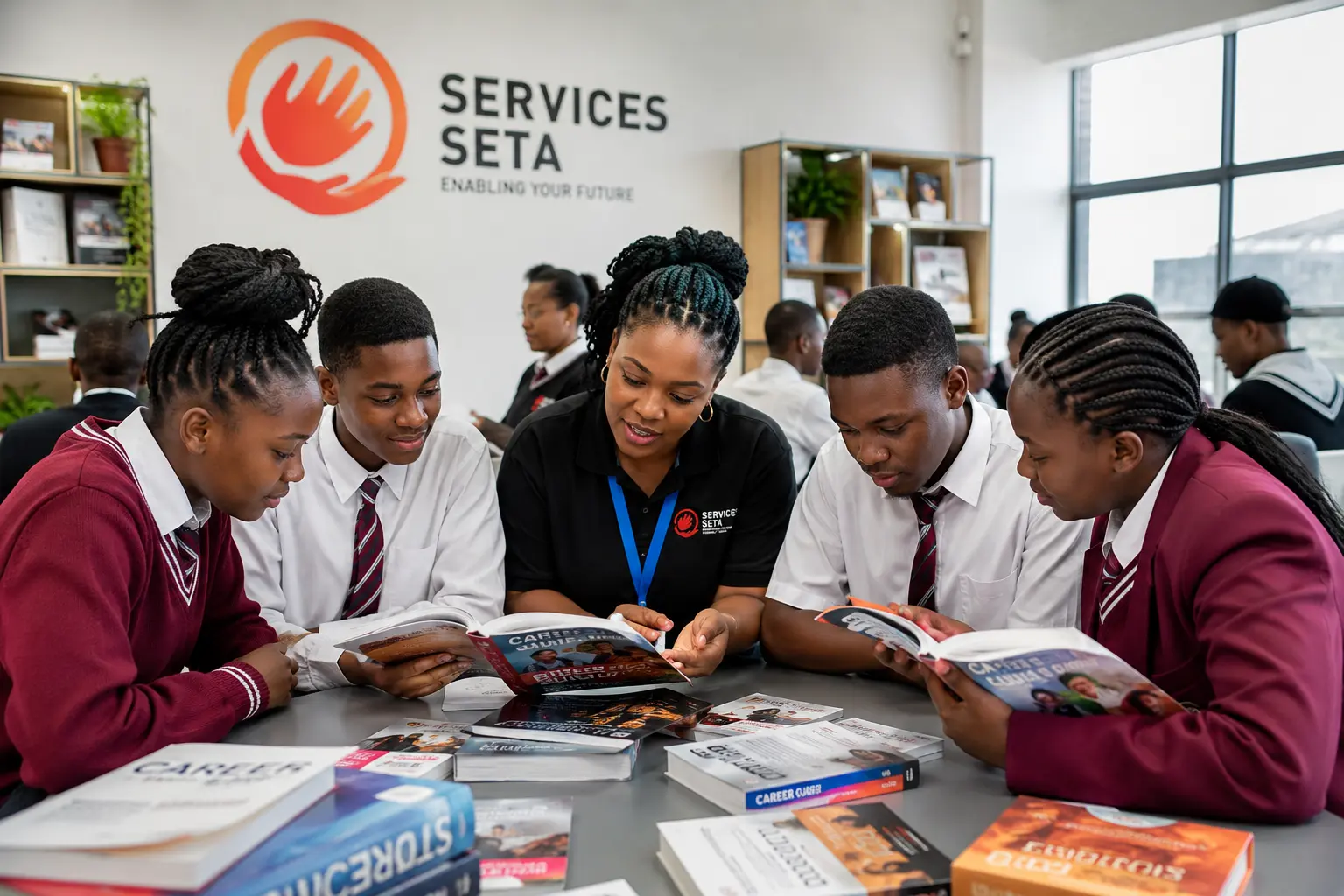
Some 450 high school learners from Mkhambathini Area in KwaZulu-Natal recently took part in an education campaign at Esidadeni that involved reading, career guidance and personal development.
The engagement brought together the Services Sector Education and Training Authority (Services SETA) and a range of education, business and community organisations, including the RedBookshelf Foundation, Durban University of Technology (DUT), Nedbank, Mangosuthu University of Technology (MUT), Icebolethu Group Foundation and Berea Group of Colleges.
The event gave school learners the opportunity to benefit from more than a reading promotion. It also gave young people the chance to consider their education and career options.
Reading provides a foundation for development
Reading was a key aspect of the engagement, with the organisers focusing on its role in enabling young people to learn and provide the knowledge and understanding to think critically about the world.
For high school learners, reading can help build language, comprehension and critical thinking skills that contribute to learning in all areas.
The engagement underscored the importance of reading in both education and personal development.
Becoming exposed to new ideas through reading and other activities can empower learners to think for themselves and make their own decisions about their education and career.
Career guidance creates an opportunity to explore options
Another element of the event was career guidance.
Young people were able to learn about their options after high school and make informed choices about the type of education and skills development that would suit them.
This is particularly useful for pupils who will soon be considering their post-school options, such as studying at university, vocational training or acquiring skills development while working.
By finding out more about the different ways in which you can continue to learn, you can make an informed decision about the best path to take based on your interests and strengths.
Universities, colleges, skills programmes and workplace training may offer various opportunities depending on your needs, educational results and career goals.
Learners engage with universities and businesses
Involving institutions like DUT and MUT highlights how learners can connect what they are learning at school with the opportunities that exist for further study.
For some high school learners, being exposed to the type of environment they might experience at university can make the future more tangible – this can be especially the case where pupils do not have siblings or friends at university.
The inclusion of Nedbank and the Icebolethu Group Foundation added a private-sector and community-development perspective to the event, while Berea Group of Colleges represented a further option for further education and training.
The RedBookshelf Foundation was one of the organisations involved in promoting the reading aspect of the engagement.
Importance of guidance when making career decisions
High school learners face a difficult time when it comes to making career decisions.
Many young people have no access to the type of information that can help them to make an educated choice about the best way to achieve their goals.
Learners may have a vague idea of the type of job that they want to pursue at some point in the future, but have no realistic understanding of the qualifications, experience or other factors that will influence their ability to get a job or be admitted to a specific degree programme.
Career guidance enables learners to turn ambitions into manageable questions:
What subjects are important for the career I want?
Which qualification do I need?
Should I consider university, a TVET college or occupational training?
What skills are employers looking for?
What financial support may be available for further study?
What can I do now to prepare for life after school?
These are questions that young people can continue to ask long after they have left the school career guidance event.
Key element of skills development in South Africa
The engagement also reflects an important aspect of the skills-development conversation in South Africa: preparing young people for the workplace begins before they finish school.
Reading, communication, problem-solving, digital skills and informed career planning can all contribute to the long-term development of a learner.
For organisations involved in providing education or skills development, engaging directly with young people at a school can be an effective way to expose them to these aspects earlier.
Message resonates with many learners
The sheer number of pupils who attended the event – 450 – means that the engagement had an impact on a large group of young people in the Mkhambathini Area.
Its general message – that preparing for life after school involves more than making a choice about a qualification at the end of Grade 12 – will hopefully stay with them.
Learners can begin to prepare by developing their study and reading skills, researching careers, understanding their strengths and asking questions about the different types of education and training available to them.
The same message applies to parents and teachers: it is never too early to start thinking about a career, and engaging with learners about these issues before they reach Grade 12 can help them to be better prepared when the time comes.
Action plan for participants
Learners who attended the engagement can turn what they learned about into an individual career plan.
A good starting point is to choose two or three careers that are of particular interest, and then find out the following:
- The school subjects that are normally required.
- The qualifications associated with the career.
- The universities, TVET colleges or other institutions that offer the programmes.
- The costs and available funding.
- The skills and experience employers typically look for.
- The alternative career options if the first choice is unavailable.
Learners should refer to official websites when researching admission requirements, funding and programme details, since these can change from year to year.
Encouraging informed decision-making
The value of career guidance is not necessarily that it tells young people what they need to do, but that it enables them to ask better questions.
A learner who understands the differences between a university qualification, a college programme and workplace-based training is better able to investigate the opportunities that are available to them.
The Esidadeni event combined reading and career development, linking the building of knowledge with the practical choices that young people will have to make about education, training and employment.
Source
Information for this article is based on the supplied event information concerning the Services SETA partnership with the RedBookshelf Foundation, Durban University of Technology, Nedbank, Mangosuthu University of Technology, Icebolethu Group Foundation and Berea Group of Colleges.
Editorial policy
This article has been independently written to provide South African learners, parents and educators with useful context about education, reading and career-development initiatives.
We aim to distinguish reported information from commentary and do not present participation in an initiative as a guarantee of admission, funding, employment or any other future outcome.
Disclaimer
This article is intended for general information and public awareness. It is not an official publication of Services SETA, the participating universities, businesses or foundations.
Education and career requirements can change. Learners should verify current admission, funding and programme information directly with the relevant institution before making decisions.
Reader awareness: Attending a career-guidance or skills-development event does not guarantee admission to an institution, a bursary, a learnership or employment. Learners should conduct their own research and use official application channels when pursuing opportunities.
