
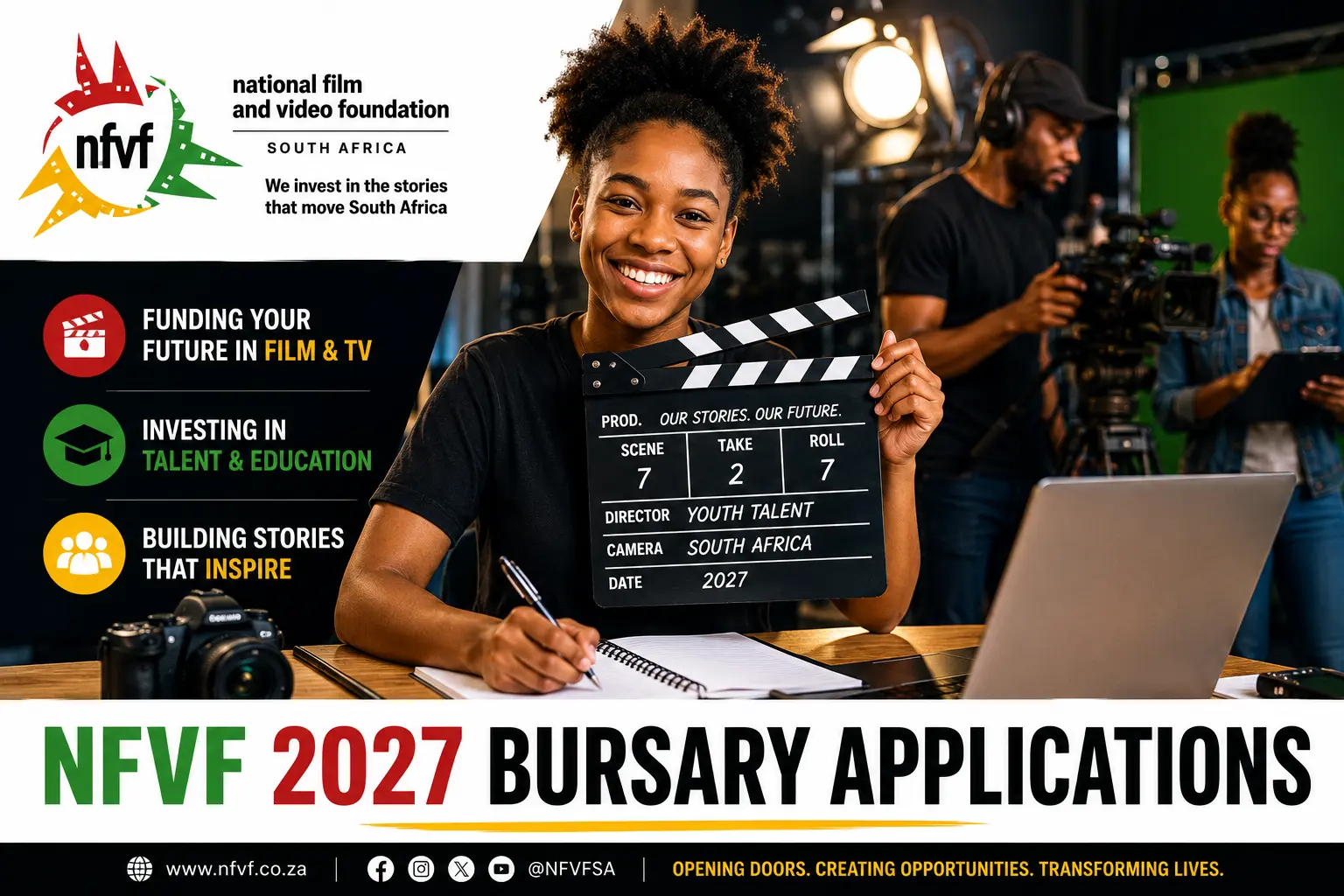
National Film and Video Foundation Offers Full Tuition Support for Eligible Students Pursuing Film and Television Qualifications
South Africa’s creative economy continues to expand as local films, television productions and digital streaming platforms create new opportunities for writers, editors, cinematographers, producers and other media professionals. To help grow this talent pipeline, the National Film and Video Foundation (NFVF) has opened applications for its 2027 Bursary Programme.
The bursary supports South African students enrolled in film and television-related qualifications at accredited higher education institutions. By funding tertiary studies, the NFVF aims to equip emerging creatives with the technical knowledge and industry skills needed to strengthen South Africa’s audiovisual sector.
Applications opened on 2 June 2026 and will remain open until 31 August 2026 at 17:00.
Programme Snapshot
| Programme | NFVF Bursary Programme 2027 |
|---|---|
| Sponsor | National Film and Video Foundation (NFVF) |
| Academic Year | 2027 |
| Study Level | Undergraduate & Postgraduate |
| Study Mode | Full-time |
| Funding | Full Tuition + Additional First-Year Support |
| Closing Date | 31 August 2026 (17:00) |
| Application Method | NFVF Online Application Portal |
Supporting Careers Behind the Camera
While actors often receive public recognition, the film and television industry depends on thousands of professionals working behind the scenes.
Editors shape stories.
Producers manage productions.
Cinematographers create visual experiences.
Animators bring digital characters to life.
Sound engineers, scriptwriters, production managers and visual effects artists all contribute to producing the content audiences watch every day.
The NFVF bursary focuses on developing these technical and creative professions, helping South Africa build a stronger and more competitive audiovisual industry.
Qualifications Covered
Funding is available for approved undergraduate and postgraduate qualifications related to film and television.
Examples include:
- Film Production
- Television Production
- Screenwriting
- Directing
- Cinematography
- Film Editing
- Animation
- Producing
- Documentary Production
- Visual Effects
- Sound Design
- Digital Media Production
The programme does not fund qualifications in:
- Performing Arts
- Acting
- Dance
- Music
- Non-film or non-television programmes
Financial Support Available
The bursary primarily covers:
- Full tuition fees.
First-year students may also receive funding—subject to approved limits—for:
- Student accommodation.
- Meals.
- Prescribed textbooks.
- Computer equipment.
- Software and academic resources.
Additional support for these expenses is capped at R50,000.
Travel costs and historical student debt are excluded from funding.
Students should be prepared to provide quotations or supporting documentation before payments are processed.
Eligibility Requirements
Applicants must:
- Be South African citizens.
- Have completed Matric.
- Study or intend studying full-time.
- Register at an accredited South African higher education institution.
- Enrol for an approved film or television qualification.
- Demonstrate good academic performance.
- Achieve a minimum academic average of 60% if already studying.
- Have a combined annual household income below R600,000.
Preference will generally be given to students enrolled at public universities and public higher education institutions.
How Applications Are Assessed
The NFVF evaluates applications using several criteria, including:
- Academic achievement.
- Financial need.
- Motivation for entering the film and television industry.
- Alignment with transformation objectives.
- Qualifying study expenses.
Meeting the minimum requirements does not automatically guarantee funding.
Preparing a Strong Application
Applicants should prepare the following before visiting the online portal:
- Certified South African ID.
- Academic transcripts or Matric results.
- University acceptance or provisional admission letter.
- Household income documentation.
- Personal motivation explaining career goals.
- Supporting financial documentation where applicable.
Submitting complete and accurate information may assist during the evaluation process.
Career Opportunities After Graduation
Graduates supported through the programme may pursue careers including:
- Film Producer
- Television Producer
- Director
- Screenwriter
- Cinematographer
- Video Editor
- Animator
- Camera Operator
- Production Coordinator
- Sound Designer
- Digital Content Producer
- Post-production Specialist
These professions contribute to South Africa’s growing creative industries, including television broadcasting, cinema, advertising, online media and streaming platforms.
Why This Bursary Matters
South Africa’s film industry has become increasingly visible on the international stage, attracting global productions while producing locally created stories for audiences around the world.
Developing skilled professionals remains essential to sustaining this growth.
The NFVF Bursary Programme helps talented students overcome financial barriers while investing in the technical expertise needed to strengthen the country’s creative economy. For aspiring filmmakers and television professionals, it represents an opportunity to transform creative passion into a recognised qualification and a sustainable career.
Sources and References
- National Film and Video Foundation (NFVF) Bursary Programme 2027.
- National Film and Video Foundation Student Funding Guidelines.
- Department of Higher Education and Training (DHET).
- South African Qualifications Authority (SAQA).
Editorial Transparency
Published: 29 June 2026
Editorial Note: This article has been independently prepared using official information released by the National Film and Video Foundation together with publicly available information about South Africa’s higher education and creative industries. It is intended for informational purposes only. Applicants should consult the official NFVF Online Application Portal for the latest eligibility requirements, application procedures and funding conditions before submitting an application.
